
SAMSON'S FALL
BY: Richard III
(2024)
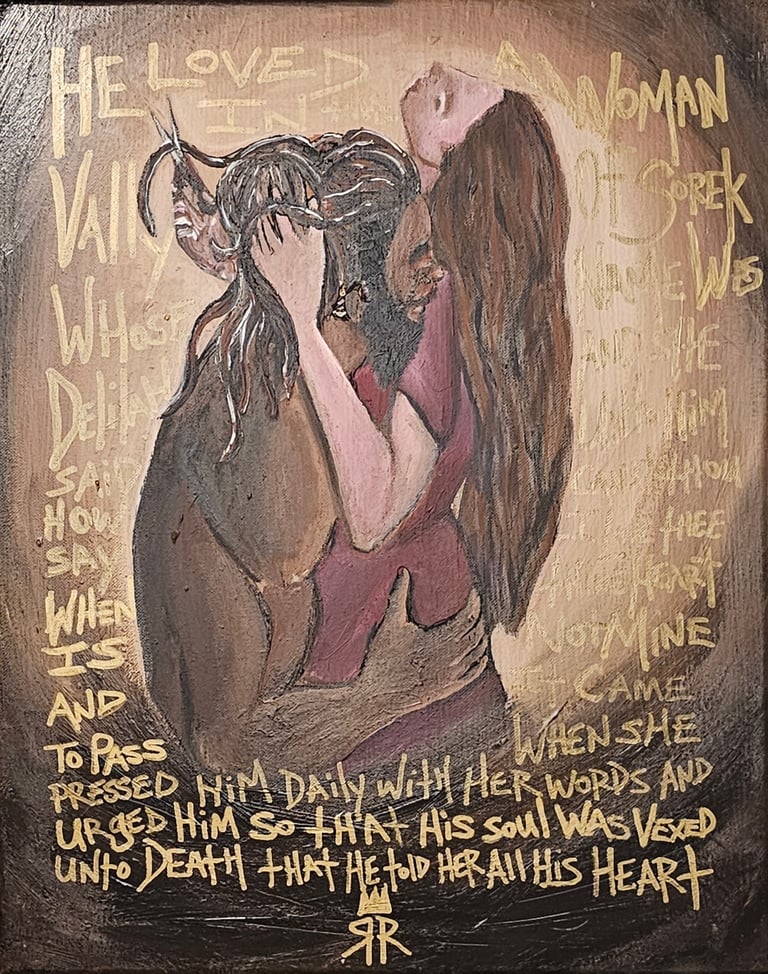
Samson's Fall
By: Richard III
Medium: Acrylic on Canvas Panel
Dimensions: 16in x 20in
Year: 2024
Status: Private Collection / Available
Samson's Fall : Delilah
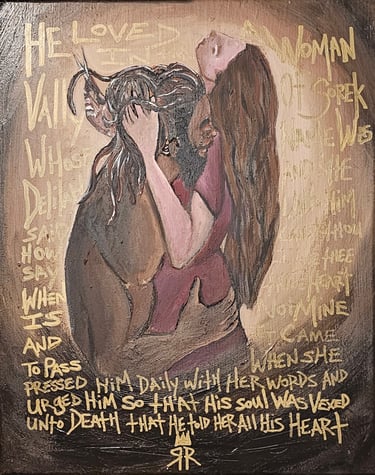
In the painting Samson's Fall, the narrative of Samson is stripped of its historical distance and presented as a raw, visceral study of the cost of spiritual compromise. The composition centers on a profound sensory disconnect; Samson is physically and emotionally enthralled by the moment, his eyes fixated and his spirit intoxicated by a false sanctuary. He is so consumed by his appetite that he is blind to the "art of distraction" being played out behind him. He cannot see the hand poised with the scissors, nor can he feel the "cold steel" of the blade against his hair, symbolizing a state of spiritual anesthesia where one loses their divine covering long before the physical destruction is realized. This internal erosion is framed by the striking placement of gold scripture that anchors the composition. The words "HE LOVED" and "HIS SOUL WAS VEXED UNTO DEATH" highlight the emotional turmoil that precedes the physical fall, with the luminous lettering representing the grace of "High Heaven" being slowly obscured by the encroaching shadows of the "Hollow."
The tragedy of the work is further defined by the asymmetry of desire between the two figures. To Samson, the embrace is everything, but Delilah’s posture reveals a chilling, tactical indifference. Her head is tilted upward, looking completely away from the man she holds. This serves as a powerful allegory for the many "Delilahs" we chase in life—be it money, career, or status—reminding the viewer that while we may lust for these things, they do not lust for us. We are merely a conquest to them, a means to an end. The job does not need us the way we need it, and the status we crave is fundamentally indifferent to our soul.
Most strikingly, Delilah’s gaze is directed toward Heaven in a gesture of triumphant defiance. As she shears the locks that represent Samson’s Nazirite vow, she is not looking at her victim; she is looking at God the Father. It is a visual "checkmate" intended to say, "Look what I have taken from You." By cutting the hair, she is effectively severing the divine tether, intercepting the strength meant to glorify the Father and claiming it as her own instrument of destruction. This work stands as a haunting warning that when we place the desires of the flesh above the requirements of our anointing, we don't just lose our strength—we trade a sacred calling for a fleeting, tactical lie.
Original:
$1,500
Studio Embellished Reproduction:
$750
Gallery Canvas Reproduction:
$410
Fine Art Paper Reproduction:
$150
To ensure the highest quality, all artwork is made on demand at the customer's request. We do not store pre-printed inventory. Please allow time for your custom print to be created. For inquiries or to place an order, please contact info@lazarushousegallery.org or call 702-703-1126. When calling, please leave a detailed message with your inquiry, and we will return your call as promptly as possible.