
INNER CITY BOUQUET
BY: Richard III
(2017)
Inner City Bouquet
By: Richard III
Medium: Acrylic on Canvas Panel
Dimensions: 16in x 20in
Year: 2017
Status: Sold / Prints Available
Inner City Bouquet : The Weight of the Unseen
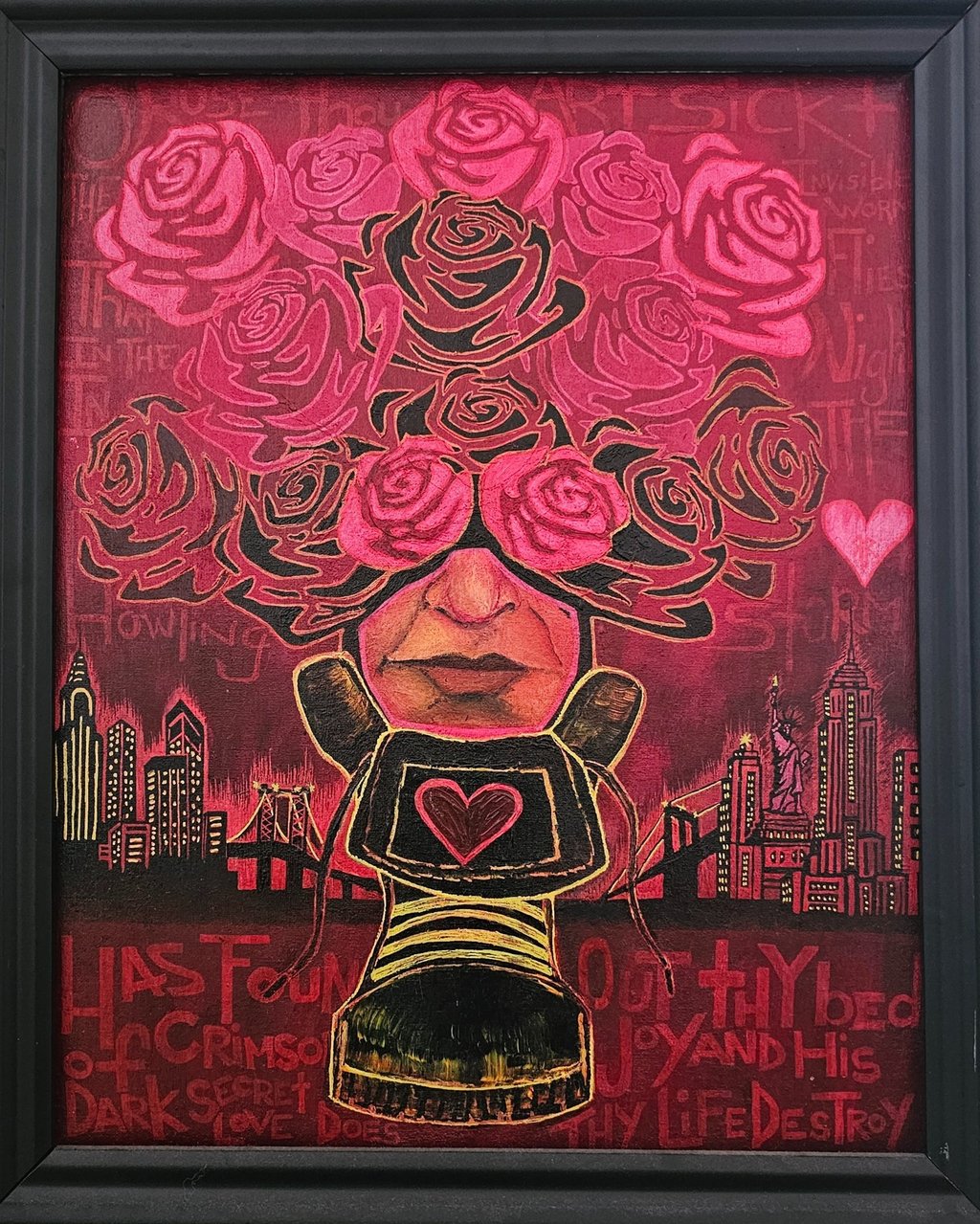
Inner City Bouquet serves as a visual confession and a sobering look at the transactional nature of modern intimacy. It explores the profound failure of men to act as "roots" and "coverings" for the women in their lives, instead treating them as fleeting aesthetic ornaments—bouquets that eventually wither because they have been denied the soil they require to survive. This work is a study of how the weariness of our own lives can make us numb to the dignity of those we encounter, turning human beings into survival tools.
The roses that form a mask across the brow represent the "Liliths"—the past entanglements that accumulate when we live without the intent of a God-honored covenant. By covering the eyes, they symbolize how a history of "disposable" relationships blinds a man to the actual humanity of the soul in front of him. We see these women as a means to scratch a temporary itch rather than recognizing them, in Adam’s words, as "flesh of my flesh and bone of my bone." Hidden beneath this mask is the face of the Matriarch—the likeness of our mothers, aunts, and grandmothers. This reveals a haunting truth: when we refuse to provide a covering and instead engage in these hollow entanglements, we are effectively masking and dishonoring the very faces of the women who raised us.
In place of a traditional vase, the bouquet is held within a weathered work-boot. This is an allegory for the grind and exhaustion of life. In the struggle to "get by," we often use our own weariness as an excuse to be indifferent to the pain of others. We place people in a vessel of labor because it is all we feel we have to give, yet we are the primary cause of their decline. We keep them in a place where they cannot receive nourishment, and when they begin to weather and fade, we discard and replace them because they no longer serve our purpose. We blame the flower for withering, while we are the ones who denied it the water.
Ultimately, this painting challenges the human tendency to turn others into coping mechanisms for our own stories. Set against a backdrop of the city skyline and the cautionary words of William Blake’s The Sick Rose, the work captures an atmosphere of "dark secret love" that consumes rather than creates. It asks us to stop seeing people as mere decorations and start seeing them as central figures in their own right—souls who are precious to the Father and deserve to be seen, tended to, and covered.
Original:
$1,550 SOLD
Studio Embellished Reproduction:
$775
Gallery Canvas Reproduction:
$420
Fine Art Paper Reproduction:
$155
To ensure the highest quality, all artwork is made on demand at the customer's request. We do not store pre-printed inventory. Please allow time for your custom print to be created. For inquiries or to place an order, please contact info@lazarushousegallery.org or call 702-703-1126. When calling, please leave a detailed message with your inquiry, and we will return your call as promptly as possible.